← All selected work

Physical meteorology · Moisture tracking

Tracing the moisture behind tropical-cyclone rainfall in East Asia

Tracked the moisture sources of tropical-cyclone rainfall near the Pearl and Yangtze River estuaries across seasons and ENSO phases.

MSc dissertation · University of Reading2019
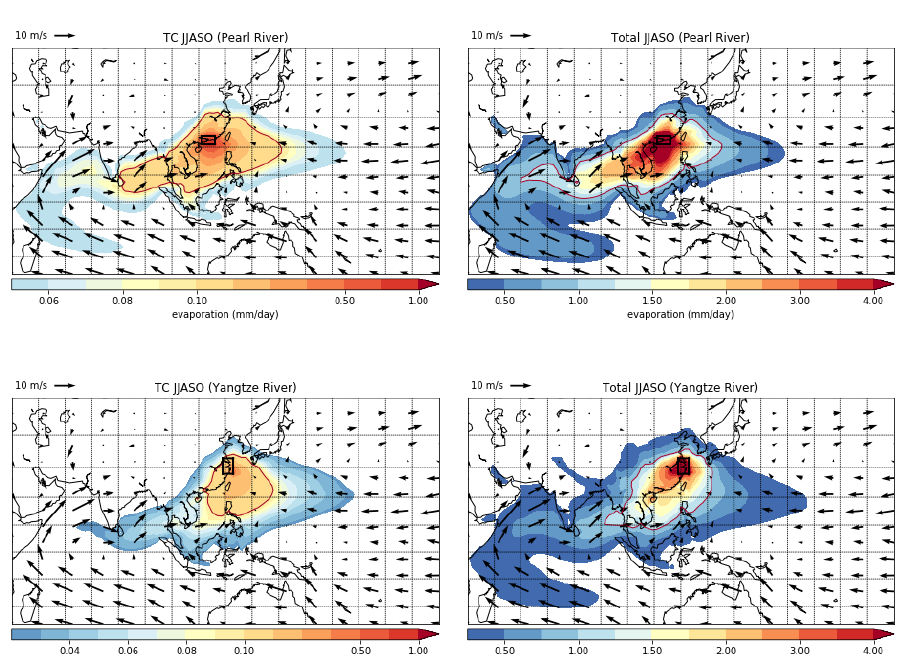
Tracked evaporation sources for tropical cyclone and total rainfall
Tracked evaporation contributing to tropical-cyclone rainfall and total seasonal rainfall near the Pearl and Yangtze River estuaries.
38 yranalysis period
2estuary regions
ERA-Ireanalysis
WAMmoisture tracking

01 / Question

Why this problem mattered

Extreme rainfall from tropical cyclones is shaped not only by storm dynamics but also by the pathways through which atmospheric moisture is supplied. The project compared those pathways for the Pearl River Estuary and Yangtze River Estuary, then examined seasonal and ENSO-related differences.

02 / Approach

From physical fields to usable evidence

  1. Combined ERA-Interim reanalysis, IBTrACS tropical-cyclone information and a Water Accounting Model moisture-tracking framework for 1979–2016.
  2. Separated tropical-cyclone-related rainfall from total rainfall and mapped the evaporation regions contributing most of the moisture.
  3. Compared early- and late-season source patterns and stratified the analysis by Niño 3.4 evolution and ENSO phase.

03 / Result

Cyclone rainfall drew from a different source mix than seasonal rainfall overall.

Relative contributions from the western North Pacific and local evaporation were higher for tropical-cyclone rainfall, while the Indian Ocean contribution was lower. The Indian Ocean signal weakened with latitude, and the western North Pacific contribution peaked later in the typhoon season.

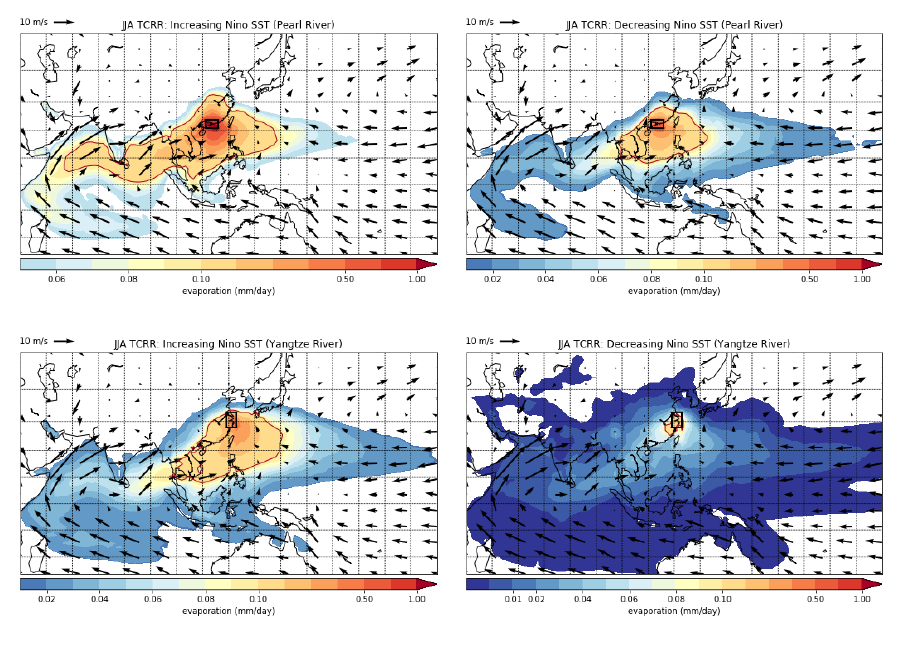
Moisture source maps for increasing and decreasing Niño 3.4 SST years
Early-season moisture-source contrasts during years with increasing and decreasing Niño 3.4 sea-surface temperatures.
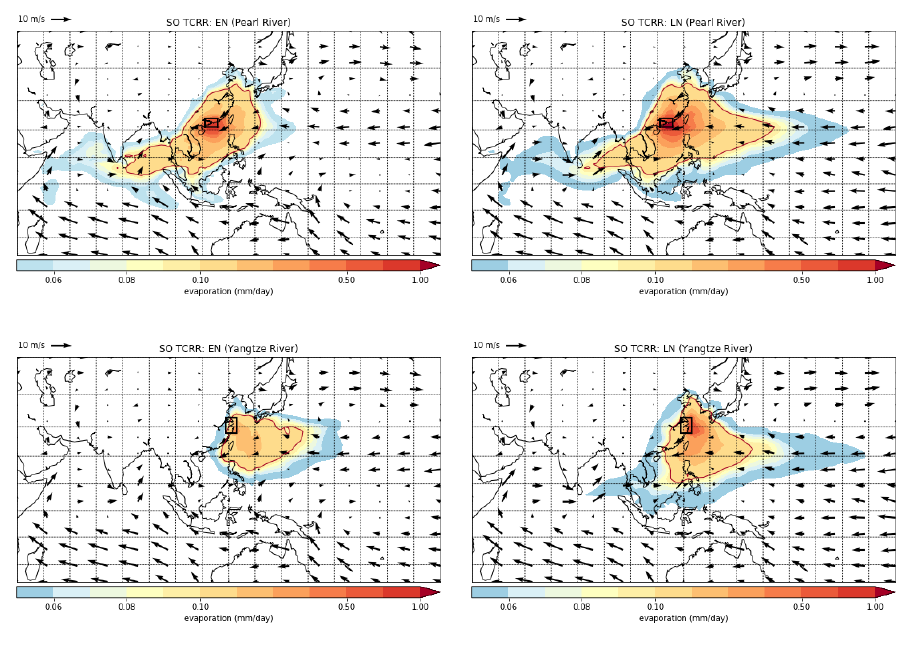
Moisture source maps for El Niño and La Niña years
Late-season tropical-cyclone moisture sources during El Niño and La Niña years.

04

Implications

The ENSO comparisons suggest that large-scale circulation variability can reorganize the moisture pathways feeding cyclone rainfall. Early-season changes were connected to the broader ENSO–East Asian summer monsoon relationship, while late-season differences were more evident in the western North Pacific source region.

05

Limitations

The rapid-intensification case-pair analysis did not yield a strong general conclusion and should be treated as exploratory. Reanalysis resolution, event classification and a limited sample of matched storms also constrain attribution.